Wednesday, December 12, 2012

"It Started Over Hamburgers," by Jennifer Chapman

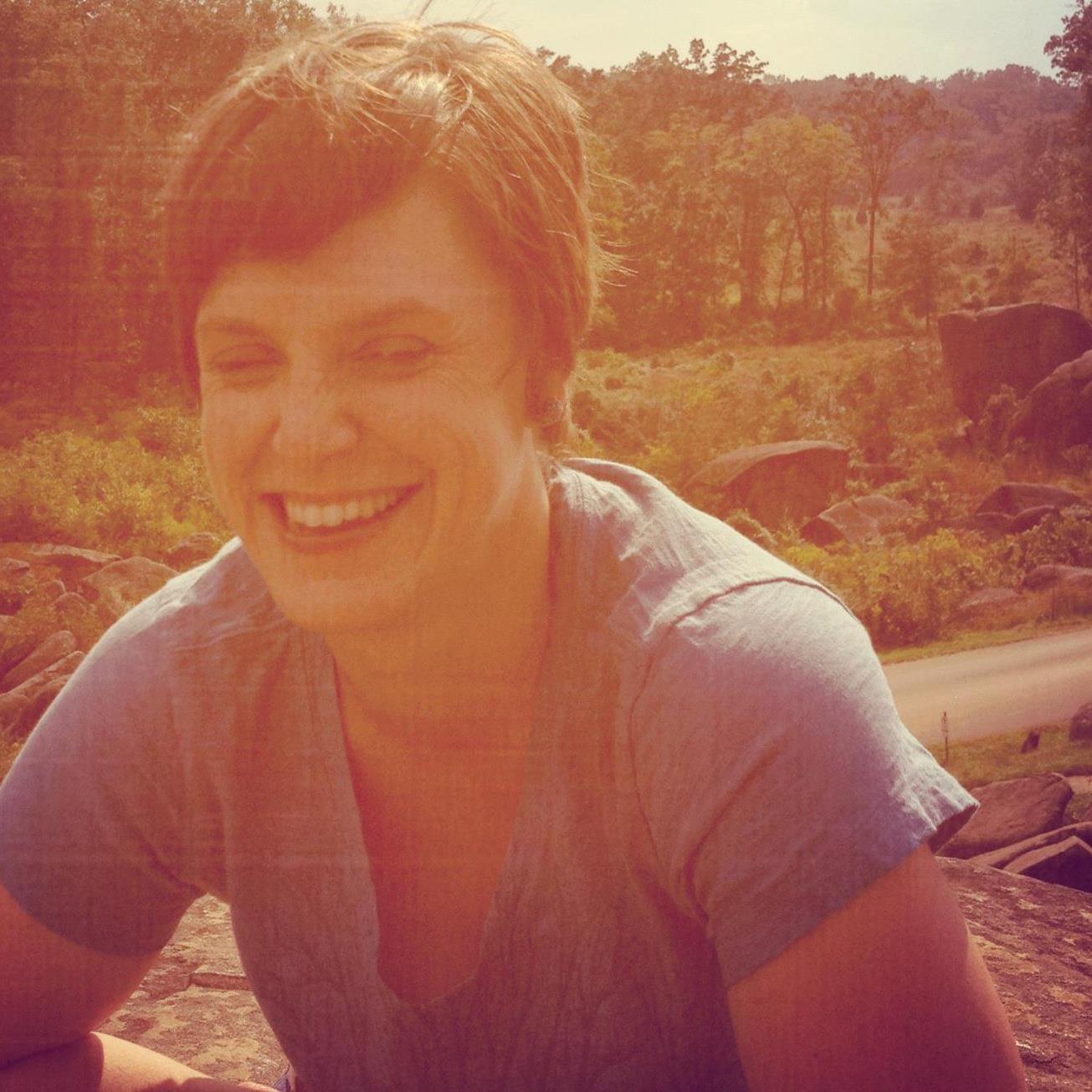
This post is based on one written by Prevention Planning Group (PPG) co-chair Jennifer Chapman in 2009.

It started over hamburgers.

He was lying in a hospital bed.  Starving, yet wasted, and wondering why his body had turned on him.  At 95 pounds this once vibrant and oft irreverent man was craving something he knew he could no longer swallow let alone keep down.  He fought in a war, for God’s sake, but couldn’t defeat a hamburger?

Me?  I was an always-teetering-on-the-brink-of-cheating-vegetarian whose mouth started watering the minute he mentioned hamburgers.  At a healthy 95 pounds I perched on the side of his hospital bed while we dreamed up combinations of condiments and toppings to go on our imaginary feast of hamburgers and french fries.

And that’s when we finally discovered what we had in common.

On the surface we couldn’t have been any different.  Really.  Not even if we tried.  On paper (or even in a photograph) we were polar opposites.  Chase was a middle-aged, former heroin-addicted, city dwelling veteran who live a hard paycheck-to-paycheck life.  He had first-hand experience with racism & race riots, poverty and disenfranchisement.  On the flip side, I was a recent college graduate twice over from a quiet suburban neighborhood and while my family never had extra money to throw around, I never got the idea that we were lacking for anything.

So how did we end up sitting together on a hospital bed talking about hamburgers and hoping against all hope that someone would figure out a way to cure AIDS before it was too late?

**

In 1995, after graduating college, a friend of a friend helped me land a job at a state-run public health clinic.  Trying to figure out how I was ever going to combine my interests in medicine with the social/behavioral sciences and find a job that contained adventure, a chance to hear other people’s  stories and most importantly, didn’t involved sitting behind a desk for 8 hours…this job, although gritty and unglamorous and sometimes downright dangerous, seemed perfect for me.  My actual job was to go out into the community and locate people who had been exposed to a variety of communicable diseases and bring them back into the clinic for testing and treatment.  And while I could write a novel about those experiences it this next one that has kept me working in this field for the last decade and a half.

When I proudly walked in to work one morning and announced to my co-workers that I had been matched up with an “AIDS Buddy” that I was meeting for the first time after work, I didn’t expect the lukewarm and rather forced enthusiasm that came from everyone.  Comments like “why wouldn’t you want to leave this life on your desk at 5:00 and go home and pretend it doesn’t exist?” coming from my boss was quite shocking and a bit demoralizing.  Seriously?!?  We were public health professionals; I couldn’t believe that these people didn’t want to do it.  How could you leave an incurable epidemic on your desk at 5:00 and come back to it in the morning?  How could you turn your back on someone that everyone else already had?  It was 1995.  The fight against HIV/AIDS was still young.  Sitting on that hospital bed while talking about hamburgers there were literally less than a handful of available treatment options, none of which were going to do any good for my buddy.  And my boss and coworkers wanted to go home at night and forget it existed until 9:00 the next morning?

Undeterred, I rang Chase’s doorbell that evening, waiting nervously to meet my AIDS buddy.  Panicky, in part, because I had made about ten wrong turns on my way to his house but mainly because the volunteer coordinator had made an exception to his “they have to have a prognosis of at least three months” rule to match the two of together.  Together because there was “something” about me and “something” about Chase.  Something indescribable and against all of the rules and something that flew in the face of everything that made sense on paper… yet he wanted the two of us to meet because he thought that we each had something to offer the other.

Shortly after our conversation about hamburgers, my dear friend Chase passed away.  Not before dozens of visits and hundreds of stories and laughs and tears and promises to share holiday meals with his family (that following Thanksgiving was still the best I ever had).  Not before I realized that even if my entire workplace tried to dissuade me from doing something I should try it anyway.  And not before I got to hold his hand and whisper to him that he had fought the good fight and if he was tired and wanted to go, his family said it was okay for him to let go.  Chase taught me that it was okay to talk about subjects that others shied away from, like drug use and racism.  I taught him that not every white girl from the suburbs went to college to land a banker-husband.  We taught each other that it was okay to be scared and admit when you didn’t know what to do and that polar opposites sometimes make the best of friends.  To this day – almost 15 years to the day that my friend died – I still think of the personal and professional lessons that my friendship with Chase taught me.  Including that it’s okay to indulge in a really good hamburger every once in a while.

This post is part of our World AIDS Day blog series celebrating the Philadelphia-area HIV/AIDS community.  To share your own story, please submit an original post to HIVPhillyWebmaster@gmail.com or fill out an interview form.

Tuesday, December 11, 2012

"Seasons," by Patrick

Our next entry is another video from the "Having it Heard" project.  This is Patrick's digital story, "Seasons."

Monday, December 10, 2012

An Interview with Dawna

This post is based on an online interview form submitted by Dawna on December 7, 2012.

Tell us about yourself.   I'm 45 years old and live in Philadelphia, PA and am HIV+. I am the founder and Executive Director of Positive Voices of Philadelphia, Inc. I have 2 biological children, 1 child that I am the caretaker of, and many children have been fostered through my home. I have 3 brothers and no sisters. I am married to Larry 'Ali' Watson. I love spending time with my family and volunteering in the community. When I am relaxing I watch movies, knit, crochet, sew or do needlepoint. I am also a Muslim and enjoy studying about my Religion.

What made you get involved in the HIV/AIDS community?   My son Joshua J. Edwards, aka Khalil Muhammad (now deceased). He was diagnosed in 1989 with HIV and it happened during my pregnancy. I knew nothing about HIV/AIDS.  Once I found out that my son had it and they gave him only 6 months to live (he lived to be 15 years old), I decided right then and there to learn all I could and become an educator, activist, and advocate for those living and those who have passed.....this was over 20 years ago.

If you could change one HIV policy or implement a new policy, what would it be?   I would implement a policy that makes HIV/AIDS a part of health classes starting in middle school. I think it is very important for the future generation to learn the true facts about HIV/AIDS at an early stage in life due to the fact that they are the ones who are becoming infected more and more and at younger ages.

Who do you look up to or admire?   My son (Joshua), my mother (Rose - now deceased), my daughter and my husband.

What do you think is the biggest challenge facing people living with HIV/AIDS?  Disclosure for fear of people judging them. Stigma is still a very large part of the HIV/AIDS world and people are still afraid to disclose their status and get the support they need including to their family

If you found out your friend was recently diagnosed with HIV, what would you tell him/her? That I know what they are going through because I went through some of the same feelings. Then I would give them a hug tell them I love them and that I will help them through it. I will let them know that it is not a death sentence and they can live for years. I would then tell them that they should get into medical care and begin medicine as soon as possible and then work on getting a case manager. I would reassure them that I would be with them every step of the way and that they would not have to travel this road alone.

What do you think? Would your answers be different? Take the interview yourself online, and we'll post your responses here.

Sunday, December 9, 2012

"Keep Dreaming," by Allison

Next, we have another digital story sent to us by Adam.  Here's the description:

"Allison thought that HIV would never happen to her. As a proud mother of three and grandmother of four, her HIV-diagnosis really scared her at first. She has since realized that HIV cannot stop her from following her dreams. She feels that it is important to go out and speak out about HIV/AIDS, especially since so many people remain scared to do so. Her hope is that more people will show the courage to face HIV and talk about it. She is working toward a society where people can find more support from family and have access to the necessary tools and knowledge they need to lead healthy lives.

She made this digital story as part of Having It Heard, a digital storytelling project for social change. To learn more, please visit havingitheard.org"


Saturday, December 8, 2012

An Interview with Nicole Johns, OHP Staff

 
Tell us about yourself.  I am lucky enough to have worked at the Office of HIV Planning for a little over ten years, in a number of different roles. I really enjoy my time with the Positive Committee and other committees, meeting people, learning from them, and trying to help make the HIV health care system be as accessible and comprehensive as possible. My partner, Travis, and I have two little boys who keep us laughing and running. I enjoy crafty things like knitting, and also like to spend time outdoors hiking, biking, and playing with my kids.

What made you get involved in the HIV/AIDS community?  I accidently became a public health practitioner and an advocate for people living with HIV/AIDS. I started working at the Office of HIV Planning in 2002 taking meeting minutes. After I learned the jargon and got to know the people, I was hooked. I enjoy the ever-changing landscape of HIV/AIDS- whether policy, medical breakthroughs or social science - it's always new. I am passionate about ending stigma and eventually ending AIDS. I think my personal skills and strengths make me best suited for the policy/governmental side of the fight, but who knows where this journey will lead.

I also have some personal cause for this fight. A close friend and a family member have been living with HIV for years, thriving and helping others. They are a big source of inspiration and energy when I get frustrated or feel burned out.

If you could change one HIV policy or implement a new policy, what would it be?  I would implement universal single-payer health care for all Americans. This isn't an HIV-only policy, but it is one that would dramatically increase the numbers of insured HIV-positive folks, as well as help millions of Americans have access to health care and prevention services. Until all people have equal access to health care, we do not have equality in America.

Who do you look up to or admire?  I admire my friends who live generous and full lives. I have a friend who started the Student Run Emergency Housing Unit of Philadelphia. I have another friend who opened her family's home to two young men who had nowhere else to go. I have other friends who are social workers and teachers who give so much of themselves. There are so many sources of inspiration in my life. For this, I am blessed.

What do you think is the biggest challenge facing people living with HIV/AIDS?  Stigma. Stigma is at the root to so many challenges facing people living with HIV/AIDS. Until we end stigma we will never End AIDS.

If you found out your friend was recently diagnosed with HIV, what would you tell him/her?  'I love you and you are going to be fine.' I would do my best to help my friend get a great doctor and find the supports she needed. But most importantly, I would reassure her that I was there for her and I would help her in whatever ways I could. And if she wanted to hear it, I could share with her some stories about all the awesome people I know who are living good happy lives , who also happen to have HIV.

What do you think? Would your answers be different? Take the interview yourself online, and we'll post your responses here.

Friday, December 7, 2012

"People Like Me," by Roy

Here is another video sent to us by Adam.  This is Roy's story, entitled "People Like Me."


Thursday, December 6, 2012

"Smiley," by Adam

Adam Bortner creates digital stories.  We haven't had the pleasure of meeting him (yet - come visit us!), but he has done great work with videos.  We'll be sharing more of the stories that Adam helped to tell throughout the month, but we'll start with his.

Adam wrote:

I have worked over the past three years directly with people living with HIV/AIDS in the Philadelphia to document their stories and elevate their voices. We have made digital stories together (sort of like movies, but the core is someone's recorded life story that is accompanied by photographs/images and sometimes music). Some of the people who made the stories wanted to share them with the world and have uploaded them to YouTube. They are very powerful.
 
Adam also sent us the story that got him into this.  We are really pleased and honored to be able to share it with you.