Showing posts with label research. Show all posts

Wednesday, February 14, 2018

The EMA Ryan White consumer survey results are here!

This is a big deal.

Almost 400 people living with HIV told us about the services they use and the kinds of problems they had getting what they need. And lots of other things too. You’ll have to read the report to get all the details. But here’s a quick summary of what we learned and how we use this information.

Good news and bad news (mostly good news)

The region’s Ryan White clients are retained in care and virally suppressed. Almost everyone is getting the HIV medical care they need and are satisfied with the services they receive. Most people have insurance and a regular place for HIV care. They like and trust their doctors and case managers.

But

Life is hard for many people living with HIV who are living in poverty. Inadequate and unreliable transportation, unaffordable co-pays and deductibles, a history of incarceration, and homelessness and lack of affordable housing are the most common challenges people reported. These challenges prevent them from getting the medical care and other services that they need. But more importantly, the challenge of living in poverty with complex health conditions is really stressful. People need help and support to live healthy and happy lives.


Why the survey is important

We asked a lot of questions, which is why we have a 45+ page report. The report describes how we designed the survey, who responded, and what people told us. We also did advanced statistical analysis to see what kinds of patterns we could see from what people told us. We included other research and data about people living with HIV and their access to services in our EMA and in the United States to give us a better picture of how our EMA compares to other places.

The Planning Council and AACO use the information from the survey to improve services and to better understand PLWH’s experiences and challenges. The Planning Council uses this information when they decide the EMA’s service priorities and how the EMA’s funds will be budgeted. AACO uses this information in the HRSA grant applications and in other reports. We have heard that HIV service providers use this information when they write grant proposals and in planning their programs. 

We couldn’t have done it without you

This survey would not be possible without the support of Ryan White service providers. We send them our appreciation. But our biggest thanks are reserved for the individuals who shared their personal information and sometimes painful stories with us. We are grateful for your trust and vulnerability. We will use this information as best we can to continue to provide quality services to the people living with HIV in our EMA.

The full report is available here

Thursday, August 22, 2013

Quick Notes on the Uninsured

I was lucky enough to be a part of a 2-day training on health reform (Affordable Care Act/Obama Care) earlier this month and got some great information and resources that I will be sharing with you faithful readers over the next few blog post. Most of the information I'll share is collected and provided by Enroll America, a nonprofit dedicated to making sure every uninsured American knows about the increased coverage options under the ACA. You can find all sorts of community and consumer education materials at Get Covered America. Let's start off with understanding who are the uninsured and how we can reach them.

Guess how many uninsured Americas know about the expanded coverage options under health reform (ACA, Obama Care)?

22%. 78% of uninsured Americans have no idea of their expanded coverage options under health reform. They have no clue. We have to change that.


Graphic from Enroll America Presentation Materials.

Who are the uninsured?

Minorities in America are more likely to be uninsured than are Whites/Caucasians. Men are more likely to be uninsured than women. People living in poverty are more likely to be uninsured than those with more income, with an exception being those working but earning low income, who earn too much for safety net programs and not enough to make health insurance affordable. These low income workers also often work jobs part time or their employers do not offer health insurance. Most people who are uninsured are not uninsured by choice. They do not health insurance either because they can't afford it or because they are excluded because of a previously diagnosed health condition (diabetes, heart disease, HIV, cancer, etc.). Many have been uninsured for more than 2 years (67%).


How do people feel about insurance?

Almost all the people surveyed by Enroll America thought health insurance is important (91%). Cost and affordability are the biggest barriers to health insurance for people. Many of the uninsured have shopped for insurance in the individual insurance markets, outside employer offered insurance (44%). They found this experience stressful, confusing and frustrating. They want health insurance, for financial and health security, but have no real options under the current system.


How do we reach the uninsured?

People have some misconceptions about the uninsured, one might be that they are not online because of affordability or access to technology. We can see by the graph below, that the uninsured are using the internet and smart phones just like other Americans. We can use social media and technology to reach different segments of the uninsured to get the word out about enrollment and insurance coverage options. 


But even well-connected and savvy internet users prefer to do somethings offline. Shopping for and enrolling in insurance is one thing many prefer to have in-person assistance with, rather than to go it alone online. According to Enroll America's survey, 75% of uninsured people who are newly eligible for coverage would prefer in-person assistance for enrollment.  So this is where Certified Application Counselors, Navigators and other in-person assisters are going to be key to getting all eligible Americans enrolled in health insurance.


In our next installment we will explore the messages that will work best to help people get informed and enrolled. 
 

Thursday, April 18, 2013

The Science: An HIV Cure

This post is part of a monthly series published on the third Thursday of every month.  In this series, our staff tackle the latest topics and studies related to HIV.   


HIV-infected T cell
HIV-infected T cell (image from NIAID_Flickr)

Earlier this month, I attended a webinar on the state of HIV cure research.  Dr. Steven Deeks did a great job presenting in this AIDS Vaccine Advocacy Coalition (AVAC) webinar.  (If you'd like to download his slides or listen to the audio, you can do that here.)  Here's a brief overview of the latest in HIV cure research.

Why do we want a cure?
Antiretroviral therapy (ART) doesn't restore health.  There are lots of side effects to ART.  There are also medication access issues, and adherence can be difficult. 

Why doesn't ART cure HIV?
HIV is great at hiding in the body.  Even when ART is attacking HIV, there are so-called "viral reservoirs" lying in wait.  When treatment is stopped, the hidden HIV springs into action.  It's almost like a game of cat and mouse.  The trick is finding a way to get rid of the hidden virus.

Functional Cure vs. Sterilizing Cure
When we talk about an "HIV cure," it can be one of two kinds:  a functional cure, or a sterilizing cure.  A functional cure can be defined as "long-term health in absence of therapy."  There might be some virus left in the body, but it's not causing any damage.  On the other hand, a sterilizing cure refers to the total eradication of any virus capable of replicating.  This refers to complete annhiliation of any HIV in the body.

Timothy Ray Brown headshot
Timothy Ray Brown in POZ
The Berlin Patient
Timothy Ray Brown, otherwise known as the "Berlin patient," is the first case of a person cured of HIV.  Doctors are currently trying to prove that he experienced a sterilizing cure after chemotherapy and a dangerous experimental blood stem cell transplant.  The stem cell donor had a CCR5 mutation, which meant that the donor's cells did not have a special receptor that HIV-1 needs in order to take hold.  Brown has been off ART for about five years, and there is no evidence of the virus rebounding.  In fact, his antibody levels have been declining.  Read more about his story here, or get the original study published in the New England Journal of Medicine here.


Baby Cured of HIV in Mississippi
Last month, a new possible cure was announced.  In this case, an HIV-positive mother who was not in care gave birth to a baby girl.  A pediatrician realized that there would be a high risk of transmission, so they started ART in the baby about 30 hours after delivery.  Two blood tests in the baby showed HIV RNA and DNA, so doctors are generally confident that the baby was actually HIV-positive.  The child is now 2 1/2 years old and has been off ART for a year.  Her immune system is healthy and tests are not easily detecting HIV RNA and DNA.  There is debate about what happened - some believe that the virus was only in the mother's cells, others think that only short-lived T cells were infected, and others think that there was something about the baby's immune system that helped eliminate the virus.  There's no published study, but you can read an article about the case here.

14 Adults Able to Control HIV Infection in France
Right on the heels of the news of the toddler in Mississippi, French researchers announced that another 14 adults may have been functionally cured of HIV.  These individuals were all treated shortly after infection, and were on ART for some time.  They then stopped ART, but are able to control the virus without medication.  There do not seem to be any characteristics in these adults that could contribute to their ability to control the HIV, aside from their early treatment.  Read a New York Times article about the study here, or view the full text of the study from PLOS Pathogens here.

2 More Possibly Cured in Boston
Two more adults may be functionally cured of HIV following bone marrow transplants, much like Timothy Ray Brown was.  However, in this case, the donor cells did not have the same CCR5 mutation - so, they were not naturally resistant to HIV-1 like Brown's donor cells.  These patients are still on ART, but doctors are unable to find evidence of HIV in their bodies, and their antibody levels are dropping.  They're not off ART yet, but their cases look promising.  Read an article on the Boston patients here

Further reading:
Towards an HIV Cure: People Focused, Science Driven
These are the full recommendations from the International AIDS Society Scientific Working Group on HIV Care, presented in July 2012.

For the Win: Find a Cure Faster
Read the AIDS Policy Project's recommendations for improving the overall research system to encourage scientific advancements in finding a cure.


Is there another topic you'd like to see discussed here?  Please send any suggestions to info@hivphilly.org, or leave a comment below.

Friday, April 12, 2013

Towards more cost-effective HIV prevention planning

Some background: The Philadelphia Prevention Planning Group (PPG) and the City of Philadelphia's AIDS Activity Coordinating Office (AACO) work together to decide which communities have the greatest need for HIV prevention activities, and which interventions work best for those communities.  This is part of what we call "community planning."  AACO decides how the money gets spent and which organizations do the work, keeping in mind the community's needs and what is proven to work best. The PPG provides the community's voice to the process.

In 2011, the Centers for Disease Control and Prevention (CDC) approached the Philadelphia Department of Public Health (PDPH) to participate in the design and testing of a model for how to best spend HIV prevention funds to prevent the spread of HIV. The model was supposed to help health departments make cost-effective decisions to meet the goals of the National HIV/AIDS Strategy.  You can read more about the data used in the model and how the model influenced HIV prevention planning in the 2012 Philadelphia Jurisdictional Plan  (pages 93-95). 

AIDS.Gov recently released a podcast explaining this resource allocation model.  It also talks about the pilot project in Chicago, Nebraska, and Alabama, which is supposed to determine if the model works for those communities and to see if their experiences are similar to Philadelphia's.

The AIDS.Gov blog post explains more about the pilot project, HIV RAMP:

"That model was developed to help Philadelphia’s health department leadership identify the optimal allocation of HIV prevention funds across populations and prevention interventions that would prevent the most new HIV infections. Using local demographic and HIV epidemiological data inputs, and based on calculations of the cost per new infection averted, the model recommended the optimal allocation of the jurisdiction’s HIV prevention budget among several evidence-based interventions for the populations most impacted. Feedback from Philadelphia indicated that the model’s outputs served as a very useful “roadmap” to inform decision making for HIV prevention resource allocation within the jurisdiction, informing both applications for federal funds as well as efforts to strengthen local HIV prevention activities.
The current project, HIV RAMP, involves refining and piloting the original Philadelphia model in three additional jurisdictions that have different local profiles and HIV prevalence rates (Chicago, Nebraska, and Alabama), testing a technical assistance (TA) protocol to support jurisdictions in using the model, and assessing the feasibility of a software or online version of the model that could be more broadly used by other health departments.
“Because making decisions about how to spend HIV prevention funding is never ‘black and white,’ health departments need tools to help them decide how to support the best combinations of effective, evidence-based prevention strategies in their communities,” said Dr. Ronald Valdiserri, Deputy Assistant Secretary for Health and Director of OHAIDP. “Through this pilot project, we hope to develop a practical tool that can help communities apply the principles of the NHAS on the ground.”

Here are some highlights from the Philadelphia jurisdictional plan's discussion of the model development, focusing on the results:

"Cost per new infection averted is an integral part of this resource allocation model. For HIV testing in a clinical setting, the cost per infection averted is $51,293, making it the second most cost-effective intervention for Philadelphia. Testing in non clinical settings for IDU (3) and MSM (1) rounded out the top three most cost-effective interventions for averting HIV transmission at $53,935 and $17,965, respectively. The least cost-effective interventions used in the model were behavioral interventions for HIV- high risk heterosexuals ($15,642,127) and IDU ($2,931,406). Behavioral interventions were not found to be as cost-effective as HIV testing, even for HIV+ individuals. Adherence to ART (4), retention in care (5), partner services, and linkage to care (8) were ranked in the middle of the list of interventions. 
The optimal resource allocations according to those calculations would avert 72 infections in the first year and 245 infections within five years. Testing in clinical settings would receive 39% of the resources and avert 20 infections in one year, 93 infections in five years. Retention in care would receive 29% of the resources and avert 27 infections in year one and 52 infections within five years....Two-thirds of the resources would be allocated to HIV testing in this optimal model, because of the cost-effectiveness of HIV testing (non-targeted), particularly for MSM and IDU communities.  These allocations would serve 1,930 HIV+ individuals and result in 792 new diagnoses. Return on investment ranges (prevention dollars only) from 1.21 in year one to 4.42 in year five....
Recommendations from the model include allocations decisions should be made by both cost and effectiveness. Testing should be prioritized in clinical and non-clinical settings. More resources should be allocated to interventions located in care-settings. Behavioral interventions for HIV- individuals are not allocated resources. Behavioral interventions for MSM can be allocated resources under certain conditions. "


If you want to learn more about the community planning of HIV prevention in Philadelphia, check out the Prevention Planning Group or come to a meeting.

Thursday, April 4, 2013

TEDMED 2013 Comes to OHP

Do you want to learn and be inspired by some of the world's greatest thinkers and innovators in health care and public health? 

It's your lucky day! 


TEDMEDThanks to the sponsors of TEDMED 2013, the Office of HIV Planning is holding a 2 day TEDMED LIVE event April 17-18th. You are welcome to come over with your lunch and watch sessions from Washington DC live in real time.  

What? You don't know what this TEDMED thing is?! Ok, just check it out for yourself.

The people we will hear from include artists, scientists, doctors, and athletes. We will watch 3 sessions of 5-7 presenters over the two days. We are talking major players: (former) Google execs, the Director of the National Institutes of Health, stars from So You Think You Can Dance?, and so many more entrepreneurs, innovators and leaders.
 

April 17th 11:30am-1:00pm: Translating the Untranslatable

Featuring: ZDoggMD, Mick Cornett, Jill Sobule, David Agus, Jay Walker, Sally Okun,  Richard Simmons (yes, THAT Richard Simmons!)

April 18th 11:00am - 12:45pm: Going Farther While Staying Closer

Featuring: Washington Conservatory of Music, Susan Desmond-Hellman, Roni Zeiger, Elizabeth Marincola, Christopher J.L. Murray, Larry Brilliant

April 18th 1:00 - 3:00pm: What Happens When We Mix Up the Models? 

Featuring: Francis S. Collins, Manzari Brothers, Gary Slutkin, David Odde and Black Label Movement, Zubin Damania

Registration Encouraged.

All you have to do is let us know you are coming by filling out this quick registration form. If you are unable to come in person, please contact Nicole for alternative arrangements.

As a special thank you, all those who attend will receive online access (on demand and streaming) to all the TEDMED 2013 sessions through April 21st. 

Everybody is welcome to join us, no matter your profession. You are bound to be inspired and challenged by the awesome presenters at TEDMED. 


Inspiration is free, you just have to show up.

Thursday, March 21, 2013

The Science: Linkage to Care

Linkage to care is a hot topic these days. It sounds so simple, help newly-diagnosed people get into HIV care within 30-90 days (time period depends on who does the measuring). But like with so many other things, it isn’t always that simple. Humans are complex social creatures with needs, fears, beliefs, values, desires, and experiences. These factors play a big part in whether or not a person enters HIV care right away, or at all.


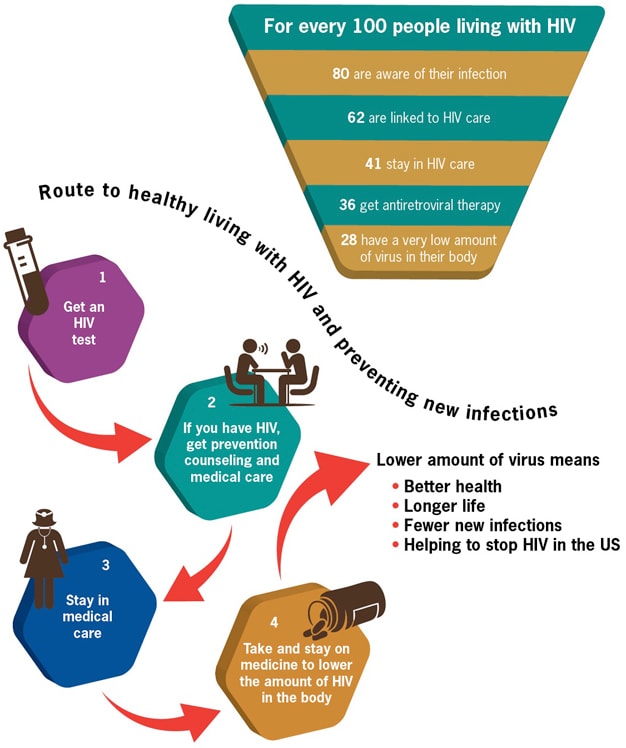
Before we go any further talking about linkage to care, we should make sure everyone understands that linkage to care is just one stop along the continuum of HIV care, as shown on the CDC’s image above and famously described by Gardner, McLees, et. al (2011). You can also check out this short Prezi to get context for the importance of linkage to care.


The CDC reports that about 80% of all people with HIV are aware of their HIV status, and only 62% are linked to care. That means that 62% of all the people in the United States who have HIV have had one HIV medical appointment. So that means 38% have not.


One way to improve our practice and service planning is to review the social science to see what researchers have found to be barriers and facilitators (things that help) to linkage. Factors vary and include individual, provider and systemic characteristics. Examples include stigma, denial, substance abuse, place of HIV testing, insurance status, health beliefs about HIV, and other socio-economic, psycho-social and provider-related concerns. Below you will find short summaries of two of the many research articles and resources related to linkage to care, followed by two more resources by Dr. Michael Mugavero (an expert on linkage and retention) to get more information.


Qualitative Assessment of Barriers and Facilitators to HIV Treatment by Bryman Williams, K.R. Amico, and D. Konkle-Parker in the Journal of the Association of Nurses in AIDS Care, 2011


This was a small qualitative study of patients at a clinic in Mississippi.

Barriers:
  • Competing demands (family, jobs, childcare)
  • Care system aspects (quality of care, access to care, privacy)
  • Stigma
  • Experience of negative effects (fear of abandonment, hopelessness, denial)
  • Various beliefs about the need for or the role of HIV treatment
Factors that helped linkage and retention:
  • Support (navigators, family, friends, support groups, clinic staff)
  • Investment in one's own care (acceptance, empowerment, knowledge of HIV, monitoring labs, etc.)
  • Positive aspects of the health care visit (relationship with provider, being assured of the best treatment)
  • Perceived vulnerability of negative consequences of not keeping up with treatment (fear of progression to AIDS, avoiding drug resistance, death)
Social support was the factor most often mentioned by participants, because it was believed to have the biggest impact on the patient's motivation to seek appropriate care. Competing needs and responsibilities are a main reason people miss care appointments. These competing needs are particularly influential for lower income PLWHA who may not have access to resources or support to meet competing needs and attend appointments.

Delayed Entry into HIV medical care after HIV diagnosis: Risk factors and research methods by Samuel Jenness, J. Myers, A. Neaigus, J. Lulek, M. Navejas and S. Raj-Singh, 2012

Study data from New York City's Medical Monitoring Project (MMP) dataset (2007 and 2008), part of the larger CDC (and partners) surveillance project and the Never in Care (NIC) study. 

Of the 513 MMP participants in 2007-2008, 23% had delayed entry in to care longer than three months after diagnosis. Two independent factors of delayed entry included an earlier year of diagnosis and testing in a nonmedical setting. Of the 28 NIC participants, over half had tested positive in a nonmedical setting. The primary reasons for delayed entry into care for both NIC and MMP were denial of HIV status and not perceiving a need for medical care.

Other articles and resources on linkage and retention in care

Predictors of Late Linkage to Medical Care After an New HIV Diagnosis by Michael J. Mugavero. (A part of the Medscape Education series on HIV)

eHIV Review Podcast, Vol 1, Issue 4 (Transcript)
Featured Cases: Linkage and Retention in HIV Medical Care by Dr. Michael Mugavero