Thursday, April 4, 2013

TEDMED 2013 Comes to OHP

Do you want to learn and be inspired by some of the world's greatest thinkers and innovators in health care and public health? 

It's your lucky day! 


TEDMEDThanks to the sponsors of TEDMED 2013, the Office of HIV Planning is holding a 2 day TEDMED LIVE event April 17-18th. You are welcome to come over with your lunch and watch sessions from Washington DC live in real time.  

What? You don't know what this TEDMED thing is?! Ok, just check it out for yourself.

The people we will hear from include artists, scientists, doctors, and athletes. We will watch 3 sessions of 5-7 presenters over the two days. We are talking major players: (former) Google execs, the Director of the National Institutes of Health, stars from So You Think You Can Dance?, and so many more entrepreneurs, innovators and leaders.
 

April 17th 11:30am-1:00pm: Translating the Untranslatable

Featuring: ZDoggMD, Mick Cornett, Jill Sobule, David Agus, Jay Walker, Sally Okun,  Richard Simmons (yes, THAT Richard Simmons!)

April 18th 11:00am - 12:45pm: Going Farther While Staying Closer

Featuring: Washington Conservatory of Music, Susan Desmond-Hellman, Roni Zeiger, Elizabeth Marincola, Christopher J.L. Murray, Larry Brilliant

April 18th 1:00 - 3:00pm: What Happens When We Mix Up the Models? 

Featuring: Francis S. Collins, Manzari Brothers, Gary Slutkin, David Odde and Black Label Movement, Zubin Damania

Registration Encouraged.

All you have to do is let us know you are coming by filling out this quick registration form. If you are unable to come in person, please contact Nicole for alternative arrangements.

As a special thank you, all those who attend will receive online access (on demand and streaming) to all the TEDMED 2013 sessions through April 21st. 

Everybody is welcome to join us, no matter your profession. You are bound to be inspired and challenged by the awesome presenters at TEDMED. 


Inspiration is free, you just have to show up.

Monday, April 1, 2013

The Big Picture - March 2013

This post is part of a monthly series (that's usually) published on the fourth Thursday of every month. It provides an overview of themes and topics from the general meetings and committee meetings of the Ryan White Planning Council and Prevention Planning Group each month. To view meeting materials and presentations, please visit www.hivphilly.org.

Ryan White Planning Council (RWPC)

Last month, the Planning Council (RWPC) did some contingency planning for what we'll do once we receive our full award from the federal government.  (Read what happened last month here.)  We don't know how much funding we have for the fiscal year that started on March 1, but we received some new information midway through the month.  We got this information after the RWPC already met, so the Finance Committee and RWPC held emergency meetings. 

In February, we already knew that we should expect a 5.1% cut to Ryan White funds due to the sequester, so the RWPC planned accordingly.  However, in March, HRSA told our area that we should expect an additional 5.2% cut, because our area's portion of HIV/AIDS cases had risen slower than cases in other areas.  All in all, the grantee (otherwise known as AACO, or the AIDS Activities Coordinating Office) suggested that the RWPC plan for an 11% cut.  This would be about a $2.1 million cut to funding for services.  The grantee also developed a suggestion that they believed would minimize the impact of the cuts on consumers.  This suggestion was reviewed at length by the Finance Committee and the larger RWPC, and ultimately approved by both.  The final plan ends funding for early intervention services and care outreach after the first quarter, and spreads the remaining cuts proportionally across the other services.

Earlier in the month, the RWPC received a treatment update from Dr. Chris Vinnard.  They also learned about Early Identification of Individuals with HIV/AIDS from consultant Matthew McClain.  The Comprehensive Planning Committee continued and honed its conversation on Ryan White service categories and their relationship to the continuum of care.  They also talked about reimbursement for Ryan White services and the need for a peer navigator program.  Meanwhile, the Needs Assessment Committee discussed how and where people enter into HIV care. The Positive Committee listened to a podcast on the Origin of HIV and received a policy update.  The Finance Committee (in their first meeting of the month) also got a policy update, before discussing the care continuum chart developed by the Comprehensive Planning Committee last month.  Last but not least, the Nominations Committee met to review applications for RWPC membership.  Seven out of eleven applications were approved, and the new members will take their seats on the Planning Council in April.
 

Prevention Planning Group (PPG)

The PPG met this month to receive a special presentation from AACO epidemiologist Dr. Kathleen Brady.  She gave an overview of the latest data on the HIV/AIDS epidemic in the Philadelphia area in order to help the PPG complete its work.  The PPG also continued its process of reinventing itself.  This month, consultant Matthew McClain presented an updated version of the group's draft bylaws based on the recommendations from the last meeting.  He also developed a draft version of a new membership application.  PPG members were asked to review the draft documents so they could provide suggestions and changes at the next meeting.

The Points of Integration Workgroup, a joint venture of the PPG and RWPC, met at the beginning of the month to develop their work plan for the rest of the year.  They continue to examine the process of linking newly diagnosed HIV cases into the care system.


This is an exciting time to get involved in community planning for the Philadelphia area. To learn more, follow the links in this post, attend one of the meetings listed on our calendar, or email info@hivphilly.org to find out how to get involved.  If you have questions, you can also call us at 215-574-6760.

Thursday, March 28, 2013

The Big Picture, Postponed

Hey loyal readers,

In case you're not aware, this has been a crazy month at the Office of HIV Planning.  We held two emergency meetings, where very important decisions were made.  I'll explain them in detail in my next blog post, but I need a little extra time to do it.  This month's "Big Picture" post will go up on Monday, and that's when our email newsletter will go out too.

In the meantime, check out Nicole's very informative post on linkage to care research (you can find it at http://hivphilly.blogspot.com/2013/03/the-science-linkage-to-care.html).  There's also a new infographic over at the Kaiser Family Foundation on the impact of Medicaid expansion and non-expansion on low-income people at http://jama.jamanetwork.com/article.aspx?articleid=1672246.

As always, let us know if you have any questions, and see you on Monday!

Briana

Thursday, March 21, 2013

The Science: Linkage to Care

Linkage to care is a hot topic these days. It sounds so simple, help newly-diagnosed people get into HIV care within 30-90 days (time period depends on who does the measuring). But like with so many other things, it isn’t always that simple. Humans are complex social creatures with needs, fears, beliefs, values, desires, and experiences. These factors play a big part in whether or not a person enters HIV care right away, or at all.


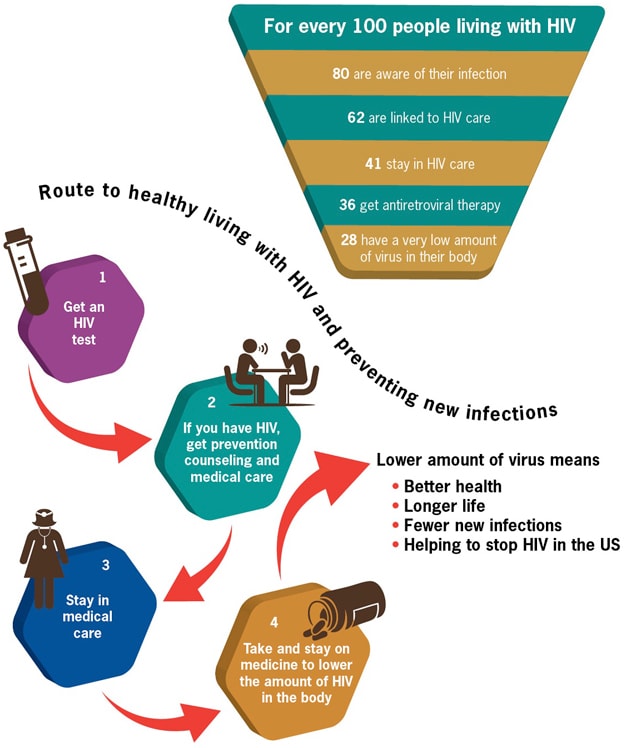
Before we go any further talking about linkage to care, we should make sure everyone understands that linkage to care is just one stop along the continuum of HIV care, as shown on the CDC’s image above and famously described by Gardner, McLees, et. al (2011). You can also check out this short Prezi to get context for the importance of linkage to care.


The CDC reports that about 80% of all people with HIV are aware of their HIV status, and only 62% are linked to care. That means that 62% of all the people in the United States who have HIV have had one HIV medical appointment. So that means 38% have not.


One way to improve our practice and service planning is to review the social science to see what researchers have found to be barriers and facilitators (things that help) to linkage. Factors vary and include individual, provider and systemic characteristics. Examples include stigma, denial, substance abuse, place of HIV testing, insurance status, health beliefs about HIV, and other socio-economic, psycho-social and provider-related concerns. Below you will find short summaries of two of the many research articles and resources related to linkage to care, followed by two more resources by Dr. Michael Mugavero (an expert on linkage and retention) to get more information.


Qualitative Assessment of Barriers and Facilitators to HIV Treatment by Bryman Williams, K.R. Amico, and D. Konkle-Parker in the Journal of the Association of Nurses in AIDS Care, 2011


This was a small qualitative study of patients at a clinic in Mississippi.

Barriers:
  • Competing demands (family, jobs, childcare)
  • Care system aspects (quality of care, access to care, privacy)
  • Stigma
  • Experience of negative effects (fear of abandonment, hopelessness, denial)
  • Various beliefs about the need for or the role of HIV treatment
Factors that helped linkage and retention:
  • Support (navigators, family, friends, support groups, clinic staff)
  • Investment in one's own care (acceptance, empowerment, knowledge of HIV, monitoring labs, etc.)
  • Positive aspects of the health care visit (relationship with provider, being assured of the best treatment)
  • Perceived vulnerability of negative consequences of not keeping up with treatment (fear of progression to AIDS, avoiding drug resistance, death)
Social support was the factor most often mentioned by participants, because it was believed to have the biggest impact on the patient's motivation to seek appropriate care. Competing needs and responsibilities are a main reason people miss care appointments. These competing needs are particularly influential for lower income PLWHA who may not have access to resources or support to meet competing needs and attend appointments.

Delayed Entry into HIV medical care after HIV diagnosis: Risk factors and research methods by Samuel Jenness, J. Myers, A. Neaigus, J. Lulek, M. Navejas and S. Raj-Singh, 2012

Study data from New York City's Medical Monitoring Project (MMP) dataset (2007 and 2008), part of the larger CDC (and partners) surveillance project and the Never in Care (NIC) study. 

Of the 513 MMP participants in 2007-2008, 23% had delayed entry in to care longer than three months after diagnosis. Two independent factors of delayed entry included an earlier year of diagnosis and testing in a nonmedical setting. Of the 28 NIC participants, over half had tested positive in a nonmedical setting. The primary reasons for delayed entry into care for both NIC and MMP were denial of HIV status and not perceiving a need for medical care.

Other articles and resources on linkage and retention in care

Predictors of Late Linkage to Medical Care After an New HIV Diagnosis by Michael J. Mugavero. (A part of the Medscape Education series on HIV)

eHIV Review Podcast, Vol 1, Issue 4 (Transcript)
Featured Cases: Linkage and Retention in HIV Medical Care by Dr. Michael Mugavero


Monday, March 11, 2013

Health reform resources

This post is a result of a conversation during the March Finance Committee meeting. We were discussing how difficult planning is in the age of health reform (the Affordable Care Act or ACA), sequesters, and continuing resolutions. If you have no idea what I'm talking about, read my last blog post and then come back to get some other sources for reliable and essential explanations on health reform. Here's a primer on the ACA and Ryan White Program, if you need a refresher.

The links below are the sources I go to most often.  Please leave links to your favorite resources in the comments. 

If you don't know what an RSS feed is or how to use it, check this out before you go any further. RSS feeds are your friend for access to the latest information with little to no effort. I love Google Reader, here's a short video on how to use it. 

Health Reform 

Kaiser Family Foundation

Kaiser Family Foundation is one of the best sources for all things related to health policy. The outstanding health reform section includes interactive content, videos, charts and graphs, and reports. I highly recommend subscribing to some Kaiser email newsletters for the latest news on health policy. You can also subscribe to RSS feeds of their content.

Other useful content from Kaiser Family Foundation:

Kaiser also provides great fact sheets for different topics or issues, including HIV.

They also wrote an excellent report on Medicaid and HIV.

Commonwealth Fund

Commonwealth Fund is a private foundation focused on improving the quality of our health system. They have a nice interactive health reform timeline and a resource tool for searching for particular topics. You can also subscribe to email newsletters and RSS feeds for regular updates.
This national consumer advocacy organization dedicated to realizing high-quality, affordable health care for all Americans is a well respected voice in health policy circles.

Navigators and Exchange Assisters are going to be needed as the ACA is fully implemented. Find out how you can get ready to implement a navigator/assister program.

Medicaid Defense Center 
This section highlights what's happening in Washington and the impact on Medicaid,includes resources for advocacy at a state and national level.

Sign up for the email updates and if you include your state in your contact information you will get state-specific information and resources.

Healthcare.gov

The federal government created this resource for consumers and small businesses to learn about enrollment in the new insurance products and how health reform affects individuals and families.

HIV and Health Reform

HRSA: Ryan White and the Affordable Care Act

HRSA just announced (3/5/2013), a new web source for information on the relationship between health reform and Ryan White, including a comprehensive review (PDF) of the key provisions of the ACA for the Ryan White Program.
 

HIV Health Reform

This site is the go-to source for HIV-specific health reform information. They offer webinars,  fact sheets, email alerts, and have a blog. There is also a section written for people living with HIV.
This organization is dedicated to providing education and capacity bulding to improve HIV care and prevention services.  Webinars are offered for Ryan White providers, primary care providers and other organizations. They also have an RSS feed and other ways to keep up to date on their work.

Impact on Health Reform in PA and NJ

State Essential Health Benefits Benchmark Plans

Center for Medicaid and Medicare Services (CMS) lists the summaries of state essential health benefits plans, including a short explanation.

Pennsylvania Health Access Network

This coalition of several PA health and consumer advocates offers PA-specific information on health access and equality issues, including a blog.

PHLP is a nationally recognized expert and consultant on access to health care for low-income consumers, the elderly, and persons with disabilities. Learn about how health reform impacts Pennsylvanians.

The NJ For Health Care Campaign is made up of a broad-based alliance of health care, consumer, senior, student, disability, women's, labor, faith-based, civil rights and social justice organizations working to bring guaranteed, high quality, affordable health care to all New Jersey residents. Resources include a report on the impact of the ACA on NJ's families.
 

Thursday, March 7, 2013

The Spotlight: Ryan White Funding Update

If you are confused about Ryan White Program funding and how the sequester will affect our local HIV care system, you are not alone. I hope this post provides you with some information and resources that alleviate some uncertainty and provide context for the Planning Council's work.

Ryan White Reauthorization

The Ryan White HIV/AIDS Treatment Extension Act (2009) expires this fall, but this does not mean that the Ryan White Program will discontinue. Congress can (and will) appropriate funds to the Program, even if the Act is not reauthorized. The previous reauthorizations of the Act had sunset provisions, which meant that if the law was not reauthorized by a set date, Congress would not be able to appropriate funds and the program would end. The sunset provision is not a part of the current act.
 
Presdent Obama and Ryan White's mother
at the signing of the 2009 reauthorization
Community advocates and federal partners agree this is not the best time to seek reauthorization, because of the current fiscal crisis and lack of bipartisan Congressional support of health reform. They feel it is too risky to call attention to an HIV-specific health care law; some members of Congress may believe such a program is no longer needed in the era of health reform. Congressional understanding of the program varies. Many members of Congress are new to the job this year (12 Senators and 67 representatives) and they need to be educated on the importance of the Ryan White Program before we can ask them to think about reauthorization.
 
The CAEAR Coalition and NASTAD provide regular updates on Ryan White Program funding and policies.
 

Sequester 

Because Congress didn't compromise on federal budget reduction in January, the sequestration of funds or sequester was triggered. This means an automatic, across-the-board 5.1% cut to every discretionary line item in the federal budget, excluding entitlements like Social Security and Medicaid/Medicare. As outlined in a report issued by the White House, the sequester cuts funding for HIV testing, HIV treatment, and research efforts. It also cuts funding to the states (Pennsylvania and New Jersey fact sheet) and the Philadelphia EMA, in more programs than just Ryan White. We are anticipating at least a 5.1% cut to the Ryan White program, but this is not a certainty. We could lose more or less funding. We will not know until later this year (see the discussion below on the funding for FY2013 and the continuing resolution). The sequester will not go away after this year. It affects the next decade of federal budgets, unless Congress and President Obama come up with an alternative plan.
 
The Bipartisan Policy Center has a great guide on the sequester.
 

Ryan White Funding FY2013 (started March 1, 2013)

Not only are we dealing with a sequester, but we also have a continuing resolution. A continuing resolution is a common way for Congress to avoid a formal appropriations process, and just carryover the budget from one year to the next. The continuing resolution can be for one year, six months, or any other period of time. We are currently working under a continuing resolution that ends on March 27th. If Congress does not pass another continuing resolution or pass appropriation bills before then, we could face a federal government shut down like we saw in 1996 and 1997. President Obama and Congressional leaders don’t want a shutdown, so it is likely we will have another continuing resolution. Funding might be "level" to the Ryan White Program for 2013, BUT would still have a 5.1% cut from the sequester.
 
Level funding to the Ryan White Program nationally does not mean the Philadelphia Eligible Metropolitan Area (EMA) will receive a grant award equal to FY2012’s award. Our EMA’s Part A grant award is based on two awards - a formula award based on living HIV and AIDS cases and a supplemental award based on the grant application’s score. In planning for FY 2013 and beyond, we are anticipating AT LEAST a 5.1% ($1.1 million) decrease in Part A funding to the EMA.  This reduction in funding will carry over into the FY 2014 allocations process that we are just beginning. This is also why the Planning Council decided to base the EMA’s FY2013 budgets on the 5% decrease scenarios from last summer’s planning process.
 
Matthew McClain’s presentation from the February 2013 Planning Council meeting offers additional information and resources about domestic HIV policy.

Thursday, February 28, 2013

The Big Picture - February 2013

This post is part of a new monthly series published on the fourth Thursday of every month. It will provide an overview of themes and topics from the general meetings and committee meetings of the Ryan White Planning Council and Prevention Planning Group each month. To view meeting materials and presentations, please visit www.hivphilly.org.

Ryan White Planning Council (RWPC)

Every summer, the Planning Council (RWPC) makes contingency plans for how it will spend money for fiscal year, which starts the following spring. That way, they have a plan when they find out how much money they’ll be getting from the federal government. Grant awards come out at a different time every year, based on when the federal budget is finalized. As of the writing of this post on February 28, 2013, we have not yet received our full award for the fiscal year starting on March 1, 2013. This year, planning will be unusually challenging.

We are facing an impending sequester and the end of the continuing resolution (a type of continuation budget when Congress fails to make appropriations). Although the Ryan White program will still be fundable, the Ryan White Treatment Modernization Act is set to expire in the fall. While this could complicate our responsiveness to changes caused by the Affordable Care Act, government and community leaders decided not to seek reauthorization due to political and budgetary concerns. We’re also uncertain about the impact of Medicaid expansion – which, at this time, is very likely in New Jersey and unlikely in Pennsylvania. It could be called a perfect storm. (Learn more here.)

To prepare for a rocky year, the RWPC and its committees have pressed forward with their work. The Finance and Comprehensive Planning Committees have already begun to talk about the summer’s allocation process. The Finance Committee has agreed to hold two allocations processes this year: one in the traditional format, and a second that addresses potential changes caused by national-level issues. Since we are not sure how much money we’ll have for the year starting March 1, 2013, the Finance Committee recommended that we act as if we have received a 5% cut (a suggestion then approved by the RWPC).

Meanwhile, the Comprehensive Planning Committee looked at how the Ryan White service categories fit in the continuum of care. (Learn more about the continuum of care here.) The Needs Assessment Committee received a presentation from the AIDS Activities Coordinating Office (AACO) on its Client Services Unit (CSU) and quality management, so they would have a better idea of how to measure the effectiveness of the different services. The Positive Committee talked about disclosure and reviewed their goals and objectives. The Nominations Committee also discussed their policies and next steps in uncertain times. They’re also accepting applications for RWPC membership through the second week in March.

Prevention Planning Group (PPG)

In the second half of 2012, the PPG and RWPC jointly explored the idea of combining care and prevention planning in one body. This idea was tabled due to the uncertainty that surrounds the current planning environment. But, the PPG was still in need of a change. The CDC released new HIV Planning Guidance in July 2012, marking a shift away from the old duties of prevention planning.

In order to decide what the future of prevention planning should look like in Philadelphia, the PPG called two special February meetings: one on structure, and another on membership. A small group of dedicated members began the hard work of ironing out the details. They chose to recommend that the PPG have 12 – 20 voting members (plus non-voting members), who would meet every other month to plan for stakeholder engagement. They also recommended that the PPG build more flexibility into its process. (Read a summary of points from the workgroup meetings.)

When the PPG met in February, consultant Matthew McClain presented draft bylaws based on the recommendations from the two workgroups. He also created an outline of a work plan for the new group. After a thorough review of the bylaws, PPG members identified a few areas for change as well as their next steps. In coming weeks, the PPG will create roles and responsibilities for voting and non-voting members. They will also develop an application and scoring process, beginning with a special membership meeting.

This is an exciting, if tumultuous, time to get involved in community planning for the Philadelphia area. To learn more, follow the links in this post, attend one of the meetings listed on our calendar, or email info@hivphilly.org to find out how to get involved.